x#
This document and any part or links there-of, may be freely referred to, copied and circulated for non-commercial educational use only, as long as a statement containing the author's name and University Address is included.
Even if you're not going to make heavy use of math in your profession, you still need to know how to think logically. Studying math accomplishes two goals: It prepares some kids to think like scientists, and prepares all the rest of them to think, period.-Marilyn Vos Savant
Techniques of Calculus I (4:4:0) Functions, graphs, derivatives and integrals, techniques of differentiation and integration, exponentials, improper integrals and their applications. Students may take only one course for credit from Math 110, 140 and 140A.
Math 22 or a satisfactory performance on the mathematics (algebra) proficiency examination.
Calculus and Its Applications, Customized Edition Daniel D. Benice, P. H. Maserick Houghton Mifflin Company.
There will be three 50-minute lectures and one 50-minute recitation class in each week. The material to be covered in each lecture is referenced in the calendar section below. Normally, the first 10 to 15 minutes of the lecture is devoted to solving the review drill problems on the previous lecture. If the lecture is not review, the main body is devoted to discussing new material. The last 5 to 10 minutes are devoted to having the students work out one or more multiple choice mini-quiz problems. These problems are directed specifically to the new material just discussed in the lecture. In addition to quizzes which will be given in the recitations, that period is primarily devoted to reviewing material and answering questions in a more personal context than is possible in the large lecture.
A Math 110 Work Book is available at the Student Book Store (SBS), 330 E. College Ave. Packets containg both the text and the Work Book can be purchased there at a 10 percent discount. If SBS has run out of packets, students may place an order at the textbook information desk. The packet will usually be available by the end of the next working day.
The Work Book contains copies of the lectures and the drills which the lecturer will be using throughout the course. Ample space is provided between paragraphs and after drill problems for the student to write comments and solutions. The Work Book is recommended to (but not required of) all Math 110 students. Solutions to these drill problems, which review the previous lecture, are offered in the initial ten to fifteen minutes of a typical lecture. Students have found these most helpful in the past. To get the most out of the drills, the astute student will attempt them prior to lecture. Both black board and/or transparencies are then used in the remainder of the lecture to introduce new material. Having copies of the work book rids the student from the distraction of taking careful notes and allows students full concentration on the lecture at hand.
Professor P.
H. Maserick
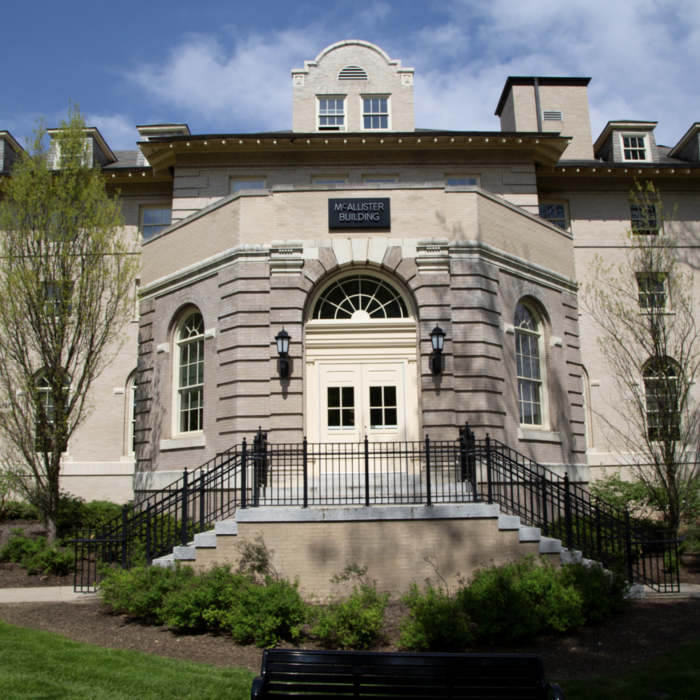
403 McAllister Building
Office Phone: 865 6652
The Pennsylvania State University
Time limitations restrict the lecturer from e-mailing the answer to those questions whose answers are already provided in these pages. Also students should include their recitation section number in each of their e-mail. E-mailing is preferable to phoning, but be sure to check the FAQ section on this Web page for the answer to your question before doing either. Don't call at home and don't leave phone messages with the departmental secretary. Bear in mind that the Math department has only one lecturer available for over 300 students enrolled in Math 110 this semester; so be considerate of his time.
Ms Kathy Wyland
108 Whitmore Laboratory
Office Phone: 863 7122
Two 75-minute midterm examinations will be given as scheduled in the calendar section below at 6:30 p.m. and a comprehensive final examination will be given during the final examination period. Questions on all examinations will be multiple choice with scan sheets provided. Penalties will be awarded to those students who do not fill out the header information in their scan sheets correctly. All examinations will be based on the problems done in lecture (especially the drill problems), those listed in the lecture notes, those in the text, including the supplementary review problems added by the lecturer at the end of each chapter, as well as those multiple choice problems given out by the lecturer at the end of the most lectures. Many of these problems tend to be at a higher level than the practice problems assigned from the text and should be mastered by those students aspiring to a grade higher than a C.
Midterm conflict examinations will be scheduled on the same day as the regularly scheduled midterms from 5:05 - 6:20 PM. No one will be dismissed from midterm conflicts before 6:20 PM. Only students with official University conflicts will be permitted to take these examinations. Conflicts must be scheduled at least two days prior to the day of the regularly scheduled examination in person (i. e. no phone calls, no e-mails) in 108 Whitmore with Kathy Wyland.
Students who present a valid and verifiable reason, such as illnesses or official University conflicts spanning the hours 5:05 PM through 7:45 PM on the dates of either of the Midterms are allowed to schedule a make-up examination. Employment conflicts are not acceptable. Students who have a schedule conflict with the regularly scheduled midterm but not the conflict must take the conflict in preference to the makeup. Except in the case of illness, the makeup examination must be scheduled at least two days before the day of the regularly scheduled examination in person (i. e. no phone calls, no e-mails) in 108 Whitmore with Kathy Wyland.
Conflicts for the final examination should be timely filed in Shields Building. Caution: The final exam schedule announced in the scheduling manual does not apply to large lectures such as Math 110. The rules for filing may be found in the Policies and Rules for Students 2001/2002.
Students will have only three weeks to file for both the overload and direct conflicts. Under no circumstance will the University accept any conflicts after the three week period. It should be stressed that The Math Department does not accept any conflicts that are not acceptable by Scheduling. Travel plans, wedding, and family get-togethers are not valid. Often the Registrar's Office will state to the students that it is up to the instructor as if they are willing to bend the policy. This is not true. The Mathematics Department follows the University Policy. Therefore, what is not accepted by the Registrar is not acceptable to the Mathematics Department. If Shields does not grant a final conflict, neither will the lecturer. Please don't ask. Do not finalize your departure plans for the semester until the final exam dates become official.
Students will not be allowed to have calculators or any other type of electronic equipment such as beepers etc, while taking any of the examinations or quizzes. However, students are encouraged to use calculators on homework and drill problems as appropriate. Watches are permissible as long as they do not contain compromising equipment.
Picture card ID's must be available for personal identification at all exams.
There will be seven 15-point quizzes given on the dates listed below. Each quiz will cover recent material, but will not include material listed in the syllabus for the lecture immediately preceding the quiz. Quiz questions will be in essay format (i.e partial credit). The use of calculators will not be allowed in quizzes. Only the highest 5 quizzes will be counted for a possible total of 75 points. This overage is to accommodate those students who have legitimate absences. Therefore make-up quizzes will not be offered. Please don't ask. Moreover, quizzes must be taken in the recitation section for which the student is registered; no switching.
| Quiz Schedule | |
|---|---|
| Tuesday | Thursday |
|
Jan 22 |
Jan 24 |
|
Feb 5 |
Jan 31 |
|
Feb 12 |
Feb 14 |
|
Mar 12 |
Mar 14 |
|
Apr 9 |
Mar 21 |
|
Apr 16 |
Apr 11 |
|
Apr 23 |
Apr 18 |
Statistics have shown there to be a high correlation between class participation and success in this course.
Participation will be encouraged by giving unannounced multiple choice quizzes at the end of some of the lectures. Points will be awarded on those occasions provided the student has signed (not printed) his or her name in the space provided on the scan sheet given to that student by the lecturer on that particular date. Number 2 lead pencils must be used for this purpose. Scan sheets are coded by the date, so that discovery of those turned in on behalf of a student not in attendance is eminent and considered an act of academic dishonesty. Neither encourage a participation quiz to be turned in on your behalf nor turn in one on another's behalf. Both are cheating offenses and severe penalties will follow any offender. At most 50 points from participation quizzes will be counted toward the student's final grade, although it will be possible for a diligent student to accumulate 60 (or more). This overage is given to accommodate students who have 2 (or more) legitimate reasons for not attending lecture. Thus make-up participation pop quizzes will not be allowed for students not in attendance no matter how legitimate their excuse may be. Please don't ask.
Participation will be encouraged in recitation by awarding points according to the number of recitations the student attends which do not have a quiz. Any student who attends n such recitations will earn 3n+4 points for a total of no more than 25 points. This allows a student to earn the full 25 points even if he/she has missed one of the recitations in which a quiz is not given. Participation points cannot be made up for students not in attendance no matter how legitimate their excuse may be. Please don't ask.
The ability to solve the practice problems, as listed in the calendar section below, are necessary for a rudimentary mastery of the subject. It is not necessary or desirable to solve all of the practice problems listed. Do a sufficient number to ensure success on the more difficult ones. The solutions to all of the problems in the text are posted periodically on the Math 110 bulletin board which is located in the lobby of McAllister Building close to the elevator. Supplementary problems at the end of the chapters extend well beyond the routine practice problems in the text and are designed to better prepare the student for more difficult problems; some of which will appear on exams and quizzes.
The Homework problems, listed under problems due in the calendar section below, will be collected randomly by section at the beginning of each lecture. The problems are due on the date opposite the problems listed. Students should consult the Web page, not the text or the Work Book or text, for verification of the problems due in case of discrepancies. After all, the Web page can be changed but not the material that has been already printed. Each attending student will be given the opportunity to turn in seven (or more) assignments. Only the best five of these will count toward that student's final grade, for a maximum score of 50 points.
Homework problems will not be accepted any time other than the beginning of the lecture for which they are due. Students coming to class late, even by a couple of minutes, forfeit the right to turn in their homework. In fairness to all, no exceptions will be made to any of these rules; please don't ask. If you must miss a particular class you may give your stapled homework paper to a fellow student to turn it in on your behalf. The lecturer will not accept it prior class on the off chance that your particular section may be collected on that day. All homework must be passed to the end of the student's row as soon as the student enters the class room and before 9:05 am.
Homework papers must be prepared as follows. Solutions must be displayed neatly on one side only of one or more standard 8 1/2 by 11 inch sheets of paper. The student's name must be signed (not printed) at the top of each of these pages. These papers must be folded lengthwise, and stapled shut with two staple placed 4 and 8 inches down from the top of the open 11 inch edge about 1 inch from the edge itself. The solutions and students signature must be written neatly on the inside of each of the pages with all work shown. The student's name, ID number, recitation section and the due date must be clearly printed on the outside of the papers. All of this must be done prior to the student coming to class, so that these papers can be turned in to the row master as soon as the student enters the classroom before class begins. Papers stapled in the class room just before class will not be accepted. Do not bring your stapler to class. Points will be deducted from those papers not adhering strictly to this format, if indeed they are accepted at all. In particular, be sure to learn the name of your recitation instructor as well as the number of your recitation section on the first day of class. Your recitation number appears on your schedule.
Grades will be assigned on a basis of 555 points and will be distributed as follows:
| Grade Distribution | |
|---|---|
|
100 Points |
Midterm 1 |
|
100 Points |
Midterm 2 |
| 75 Points | Quizzes |
| 50 Points | Homework |
50 Points |
Class Participation |
| 5 Points | In-Class Points |
|
25 Points |
Recitation Participation |
|
150 Points |
Final Examination |
|
555 Points |
Total |
This syllabus is maintained on the World Wide Web (URL http://www.math.psu.edu/math110/). All registered students at The Pennsylvania State University have the capability of viewing or printing this syllabus together with its links from either a home computer or one of the micro-labs on campus. The calendar portion listed below in this syllabus contains links to lectures, drills, graphic displays and review problems.
Graphic Assignments are linked to this Web site. These assignments are designed to help the student understand some of the more important concepts of the course, such as limits, derivatives, exponentials and integration. All are encouraged to explore these links to improve their understanding of the subject.
Solutions to drill problems are offered at the beginning of most of the lectures. These problems are review problems on the previous lecture, usually at a level slightly higher than those in the assigned homework. To get the most out of this, the astute student should solve these problems prior to lecture. These problems appear in The Student Work Book as well as links in the calendar section of the Math 110 Web page. Of course, these are not collected but should be kept for later review. Problems similar to the drill problems are frequently asked on quizzes and exams.
During the last 5 to 10 minutes of the lecture one (or more) multiple choice questions is (are) usually displayed on the computer screen to test the students comprehension of the lecture. Most of these are routine. Many do find their way to subsequent exams.
The most efficient way to master the material is to read the text section and notes on the lecture to be covered and do some of the assigned home work and the designated drill prior to the lecture. Reread the assigned section as soon after lecture as possible and do more homework problems. It is not necessary to do all of the practice problems assigned in the text; do enough so as to feel comfortable enough to move on to the more challenging problems as listed in the notes, the supplementary assignments, drills etc. As stated above, solutions to the text problems will be posted periodically in the rear lobby of McAllister Building near the elevator.
Extensive note taking is not recommended in lecture; taking notes is distractive. Time in lecture is better used by simply paying close attention. Try to solve the problems along with the lecturer. Moreover, start reviewing early for each of the three major exams. In particular make sure that you understand the solutions to the drill problems done in class. In brief, do not fall behind. Strive to keep slightly ahead of the pace set forth in the attached calendar. Come to lecture prepared. Take only minimal notes. A good reference for study hints for calculus may be found in S. Zucker's article How To Learn Calculus.
If class should be unexpectantly cancelled, the assignment for the following period will be that for the period cancelled unless the cancelled period is a review lecture. In this case both the review lecture and the assignment for that lecture will be omitted.
| CALENDAR (Through Midterm 1) | ||||||
|---|---|---|---|---|---|---|
| Day | Date | Lecture | Drill | Text Section | Practice Problems | Problems Due |
|
Mon |
Jan 7 |
|
None |
§1.1 Real Numbers and Algebra Review |
Ex1.1 1-121(odd) |
None |
|
Wed |
Jan 9 |
|
|
§1.2 Introduction to Functions |
Ex1.2 1-59(odd) |
Ex1.1 56,92,118 |
Fri |
Jan 11 |
|
|
§1.3 Linear Functions |
Ex1.3 1-53(odd) |
Ex1.2 40,52,56 |
Mon |
Jan 14 |
|
|
§1.4 Graphs of Functions |
Ex1.4 1-45(odd) |
Ex1.3 40,42,48 |
Wed |
Jan 16 |
|
|
§1.5 Functions in Economics |
Ex1.5 1-35(odd) |
Ex1.4 20,28,32 |
| End of Drop/Add Deadline | ||||||
|
Fri |
Jan 18 |
Review |
|
Chapter 1 Review |
Ch1RevEx 1-53(odd) |
Ex1.5 14,20,36 |
|
Mon |
Jan 21 |
|
None |
§2.1 Introduction to Limits |
Ex2. 1-31(odd) |
Ch1RevSup
6,11,12 |
|
Wed |
Jan 23 |
|
|
§2.2 Continuity |
Ex2.2 1-53(odd) |
Ex2.1 4,10,22 |
|
Fri |
Jan 25 |
|
|
§2.3 One-sided limits |
Ex2.3 1-35(odd) Ex2.4 1-41(odd) |
Ex2.2 18,22,34 |
|
Mon |
Jan 28 |
|
|
§2.5 Infinite Limits |
Ex2.5 1-35(odd) |
Ex2.3 10,14 |
|
Wed |
Jan 30 |
Review |
|
Chapter 2 Review |
Ch2RevEx 1-39(odd) |
Ch2RevEx 16,18,26 |
|
Fri |
Feb 1 |
|
None |
§3.1 Introduction to the Derivative |
Ex3.1 1-29(odd) |
Ch2RevSup 7,14,16 |
|
Mon |
Feb 4 |
Lect 11 |
|
§3.2 Basic Rules for Differentiation |
Ex3.2 1-63(odd) Ex3.3 1-29(odd) |
Ex3.1 4,24,30 |
|
Wed |
Feb 6 |
|
|
§3.4 Marginal Analysis §3.5 Product and Quotient Rules |
Ex3.4 1-45(odd) |
Ex3.2 54 Ex3.3 4,8 Ex3.4 10 Ex3.5 10 |
|
Fri |
Feb 8 |
|
|
§3.6 The Chain Rule |
Ex3.6 1-53(odd) |
Ex3.4 40 Ex3.5 16,24 Ex3.6 18,34 |
| Mon | Feb 11 | Lect 14 | Drill | §3.7 Higher Order Derivative | Ex3.7 1-41(odd) | Ex3.6 2,28,36 Ex3.7 6,34 |
|
Wed |
Feb 13 |
|
|
§3.8 Implicit Differentiation |
Ex3.8 1-33(odd) |
Ex3.7 8,28,32 Ex3.8 24, 26 |
|
Fri |
Feb 15 |
|
|
§3.9 Related Rates |
Ex3.9 1-23(odd) |
Ex3.8 18,22,28 Ex3.9 8,12 |
| Mon | Feb 18 | Review |
|
Mid 1 Review | Ch3RevSup Mid 1 Rev |
None |
| Tues | Feb 19 | Exam Rooms | ||||
| Wed | Feb 20 | NO CLASS | ||||
| CALENDAR (Through Midterm 2) | ||||||
|---|---|---|---|---|---|---|
| Day | Date | Lecture | Drill | Text Section | Practice Problems | Problems Due |
|
Fri |
Feb 22 |
|
None |
§3.10 Differentials |
Ex3.10 1-23(odd) |
None |
| Mon | Feb 25 |
|
|
§4.1 Increasing and Decreasing Graphs and Critical Numbers |
Ex4.1 1-73 (odd) |
Ch3Sup 23,24,25 |
|
Wed |
Feb 27 |
|
|
§4.2 Relative Extrema |
Ex4.2 1-49(odd) |
Ex4.1 20,28,52 |
|
Fri |
Mar 1 |
|
|
§4.3 Concavity, the Second Derivative Test |
Ex4.3 1-91(odd) |
Ex4.2 18,22,48 |
| * * * * * * * SPRING BREAK * * * * * * * | ||||||
|
Mon |
Mar 11 |
|
|
§4.4 Absolute Extrema |
Ex4.4 1-19(odd) |
4.3 28,36,56 |
|
Wed |
Mar 13 |
Review |
|
Chapter 4 Review |
Ch4RevEx 1-29(odd) |
Ex4.4 14 |
|
Fri |
Mar 15 |
|
None |
§ 5.1 Exponential Functions |
Ex5.1 1-39(odd) |
Ch4RevSup 5,12,16 |
|
Mon |
Mar 18 |
|
|
§ 5.2 Logarithmic Functions |
Ex5.2 1-87(odd) |
Ex5.1 20,22,32 |
|
Wed |
Mar 20 |
|
|
§5.3 Differentiation of Exponential Functions |
Ex5.3 1-99(odd) |
Ex5.2 64,72,78 Ex5.3 16,54 |
| Fri | Mar 22 | Lect 25 |
|
§5.4 Differentiation of Logarithmic Functions |
Ex5.4 1-93(odd) |
Ex5.3 56,76,78 |
| Mon | Mar 25 | Review | Drill | Mid 2 Review | Ch5RevSup Mid 2 RevSup |
None |
| Tues | Mar 26 | Exam Rooms | ||||
| CALENDAR (Through Final) | ||||||
|---|---|---|---|---|---|---|
| Day | Date | Lecture | Drill | Text Section | Practice Problems | Problems Due |
| Wed | Mar 27 | Lect 26 |
None |
§5.5 Some Additional Business Applications |
P302-E 1-23(odd) |
None |
| Fri | Mar 29 | NO CLASS | ||||
|
Mon |
Apr 1 |
|
|
§6.1 Antidifferentiation |
Ex6.1 1-69(odd) |
Ch5Sup 5,6,17 |
Wed |
Apr 3 |
|
|
§6.2 Some Applications of Antidifferentiation |
Ex6.2 1-45(odd) |
Ex6.1 60,68,70 |
Fri |
Apr 5 |
Lect 29 Graphic |
Drill | §6.3 The Definite Integral as the Area Under a Curve | Ex6. 1-29(odd) | Ex6.2 30,32,44 Ex6.3 10,16 |
| LATE DROP DATE | ||||||
|
Mon |
Apr 8 |
|
|
§6.4 The Fundamental Theorem of Calculus |
Ex6.4 1-59(odd) |
Ex6.3 24,28,30 Ex6.4 20,26 |
|
Wed |
Apr 10 |
|
|
§6.5 Some Applications of the Definite Integral |
Ex6.5 1-31(odd) |
Ex6.4 48,56,58 |
| Fri |
Apr 12 |
|
|
Chapter 6 Review |
Ch6Rev 1-37(odd) |
Ex6.5 24 |
|
Mon |
Apr 15 |
|
None |
§7.1 Integration by Substitution |
Ex7.1 1-95(odd) |
Ch6RevSup 6,15,17 |
|
Wed |
Apr 17 |
|
|
§7.2 Integration by Parts |
Ex7.2 1-57(odd) |
Ex7.1 78,88,94 |
|
Fri |
Apr 19 |
|
|
§7.4 Numerical Methods of Approximation |
Ex7.4 1-19(odd) |
Ex7.2 40,56,58 Ex7.4 42,44 (Trapezoidal Rule Only) |
|
Mon |
Apr 22 |
Review |
|
Chapter 7 Review |
Ch7RevSup |
Ex7.4 12,16,48 |
| Wed | Apr 24 | Review | None | Review of Mid 1 Review of Mid 2 |
FinRevSup | None |
|
Fri |
Apr 26 |
Final Exam Rooms | ||||
If you need additional help understanding the material here are four possibilities.
Attend announced office hours of the lecturer, any of the recitation instructors, or the course coordinator. All will be glad to help as time permits.
| Scheduled Office Hours | ||
|---|---|---|
| Name/Position | Office/Phone/e-mail | Office Hours |
| S Dave Rec Inst |
4 Osmond Bldg. 863 9674 Shantanu @math.psu.edu |
T,R 10-11 and by appointment |
| P Maserick Lecturer |
403 McAllister/109 Whitmore 865 6652 Maserick@math.psu.edu |
MW 10:10-11 and by a appointment |
| K Zhang Rec Inst |
116 A Osmond Bldg. 863 9675 Kzz102@psu.edu |
TR 3:30-4:30, W 2-3 and by appointment |
Attend the supplemental review sessions which will be taught by Lissa Shadduck; a qualified student instructor who will be sitting in each of the Math 110 lectures.
| Supplemental Instruction Schedule | |||
|---|---|---|---|
| Instructor | Day | Time | Place |
| Lisa Shadduck | Mon | 7-8 pm | 145 Fenske | Tues | 2:30-3:20 pm | 109 Sackett | Wed | 7-8 pm | 145 Fenske |
Ask questions at The Math Center. The Math Center provides free drop-in tutoring by trained student tutors for Math 110. The following two tables indicates the Math Center's schedules at both Johnston Commons and Boucke Building.
| Math Center Schedule | |
|---|---|
| 206 Johnston Commons | |
| Time | Days |
| 2:30pm-4:30pm | Mon-Thurs |
| 7pm-10pm | Sun-Thurs |
| Math Center Schedule | |
|---|---|
| 220 Boucke Building | |
| Time | Days |
| 6pm-10pm | Sun |
| 9am-10pm | Mon-Thurs | 9am-3pm | Fri |
206 Johnston Commons is located in East Halls and is closed over finals week; 220 Boucke is open finals week.
In order for you to gain the maximum benefit from the services provided, you are encouraged to use the Math Center on a regular basis, organizing your studying so that you do not leave all your questions and problems until exam time. Bring your textbook and class notes and come to the Math Center with specific questions.
As a last resort, you might consider hiring a tutor. The Math department maintains a list of qualified tutors which appears in the departmental Web pages.
Poor manners will not be tolerated. If you must come late, be considerate of others. Slip quietly in on a near side aisle seat. Don't under any circumstances step in front of the lecturer after the lecture has started or take any handouts that you may have missed (wait until class is over). If you know in advance that you must leave early (that is before class has been formally excused), speak to the lecturer about it before class and then sit on a side aisle seat, so that you won't disturb others when you leave. Don't engage in private conversations, even on the class material, during lecture. If you have any questions, don't be embarrassed to raise your hand and ask so that all can benefit from the answer. If you don't understand, undoubtedly you're not alone. Above all, do not ask the person next to you to answer a question related to the material being presented. Should you do this it disturbs the person you asked so that he/she cannot continue to follow the lecture, it disturbs those around you and it disturbs the lecturer. In brief it's just poor manners to carry on such private conversations; no matter how tempted, refrain from doing this.
If you have a problem with your recitation instructor or lecturer see that person first. If satisfaction is not received, duly advise him that you will seek recourse at the next higher level. It is both improper and impractical to go to a higher level without first addressing your problem at the level where it originated for a possible solution. If for example your problem is with your recitation instructor discuss it with him or her before approaching the lecturer. If the problem is still not solved, discuss it with the lecturer before proceeding to the course coordinator. Continue up the line until you eventually reach Graham Spanier, the president of the University.
"Academic dishonesty includes, but is not limited to cheating, plagiarism, facilitating acts of academic dishonesty by others, unauthorized prior possession of examinations, submitting work of another person or work previously used without informing the instructor, or tampering with the academic work of other students. A student charged with academic dishonesty will be given oral or written notice by the instructor. If student believes he or she has been falsely accused, he or she should seek redress through informal discussions with the instructor, department head, dean or campus executive officer. If the instructor believes that the infraction is sufficiently serious to warrant the referral of the case to the Office of Conduct Standards or if the instructor will award a final grade of F in the course because of the infraction, the student and faculty will be afforded formal due process procedures."
Answer: Documentation is not necessary because make-up quizzes are not allowed. To compensate for such legitimate excuses as yours, only (the best) 5 out of 7 quizzes are counted.
Answer: No. There are too many students to allow switching quizzes. If we did, chaos could easily follow so in fairness to all we must disallow it.
Answer: You must appear, in person, in 108 Whitmore and present your schedule to Kathy Wyland.
Answer: No, I am indeed sorry, but you were duly advised not to make any travel plans until you found out the final exam schedule.
Answer: Yes, figure roughly half of the exam will consists of material before Midterm 2. In the past several problems on Midterms 1 and 2 have been remade and appeared appeared on this exam.
Answer: Your scores are kept on the computer in testing services and the department does not have access to them until the end of the semester. I advise you to keep track of your Quiz, HW and midterm scores. Your exam scores will be published in the lobby of McAllister Building (by the elevator) within 3 days after the exam is given.
Answer: The solutions to all of the problems in the text are proper timely posted in the lobby of McAllister building by the elevator. Answers from the review supplements are timely posted on the calendar section of the web and can be obtained by clicking on the word Review.
Answer: These two problems on information which is about to be covered are put there to encourage the students to read the material prior to the lecture. As mentioned above, this paves the way for better understanding of the lecture. These problems tend to be routine but hopefully will promote better comprehension of the lecture.
Answer: In most cases the student sought are not at their phones when their messages are returned and attempts to get hold of the students usually just take too much time. As a general policy, he does not return phone messages. Your best bet is to e-mail him after you've checked the Web pages to see if your question is already answered therein. Be sure to include your recitation section on your e-mail. Of course you can always see him after class or during his office hours.
Answer: He does, except when the question asked is routine and is already answered on the Math110 Web page. Check the Web and, if necessary, ask him again after class or see him during his office hours. Remember he is teaching some 300 students so that time does not allow him to answer, and re-answer, those routine questions which are already answered elsewhere.
Answer: Yes. The average of all students is computed and that total is bench marked as a middle C. The B and A range are then set at an appropriate number of standard deviations up from this average. Similarly the D and F grades are set at an appropriate number of standard deviations below this total. This is commonly called a curve.
Answer: Forget them. They play no role what so ever in this grading scheme. Class standing is more significant.
Answer: This can't be determined until the end of the semester, after the averages, standard deviation and your class standing is known.
Answer: The cut offs along with your Final score and grade are posted in the lobby of McAllister Building by the elevator as soon as they are computed. You can also get your final grade by calling 800 876 0354 as they become due. As a matter of policy grades are not given over the phone or e-mailed by Math department personnel.