For more information about this meeting, contact John Roe, Dmitri Burago.
| Title: | The geometry of Picard's theorem |
| Seminar: | Geometry Luncheon Seminar |
| Speaker: | John Roe, Penn State |
| Abstract: |
| Picard's theorem states that an entire nonconstant meromorphic function can omit at most two values. The classical proof can be given in half a page (Littlewood famously said that that half-page would have made an acceptable PhD thesis) but what is really going on? In the early twentieth century the brothers Nevanlinna developed an approach to Picard's theorem that was elementary and quantitative. Then in 1936,Lars Ahlfors took almost all the complex analysis out of Picard's theorem. His paper on "covering surfaces" introduced many of the ideas which are at the root of today's metric geometry - isoperimetric constants, quasi-conformal maps, amenable exhaustions - and used them to derive Picard from the Gauss-Bonnet theorem; the "two" in Picard's theorem is the Euler characteristic of the Riemann sphere. |
Room Reservation Information
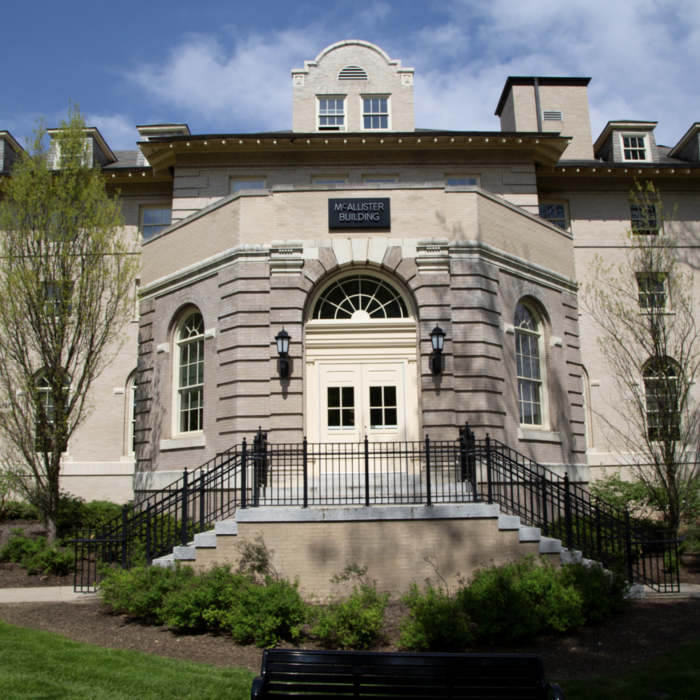
| Room Number: | MB114 |
| Date: | 01 / 19 / 2011 |
| Time: | 12:20pm - 01:30pm |