For more information about this meeting, contact Leonid Berlyand, Mark Levi, Alexei Novikov.
| Title: | Equations with random coefficients: Convergence to deterministic or stochastic limits and theory of correctors |
| Seminar: | Applied Analysis Seminar |
| Speaker: | Guillaume Bal, Columbia University |
| Abstract: |
| The theory of homogenization for equations with random coefficients
is now rather well-developed. What is less studied is the theory for
the correctors to homogenization, which asymptotically characterize
the randomness in the solution of the equation and as such are
important to quantify in many areas of applied sciences. I will
present some results in the theory of correctors for elliptic and
parabolic problems. Homogenized (deterministic effective medium)
solutions are not the only possible limits for solutions of
equations with highly oscillatory random coefficients as the
correlation length in the medium converges to zero. When
fluctuations are sufficiently large, the limit may take the form of
a stochastic equation and stochastic partial differential equations
(SPDE) are routinely used to model small scale random forcing. In
the specific setting of a parabolic equation with large, Gaussian,
random potential, I will show the following result: in low spatial
dimensions, the solution to the parabolic equation indeed converges
to the solution of a SPDE with multiplicative noise, which needs to
be written in a Stratonovich form; in high spatial dimension, the
solution to the parabolic equation converges to a homogenized (hence
deterministic) equation and randomness appears as a central limit-
type corrector solution of a SPDE with additive noise. One of the
possible corollaries for this result is that SPDE models may indeed
be appropriate in low spatial dimensions but not necessarily in
higher spatial dimensions. |
Room Reservation Information
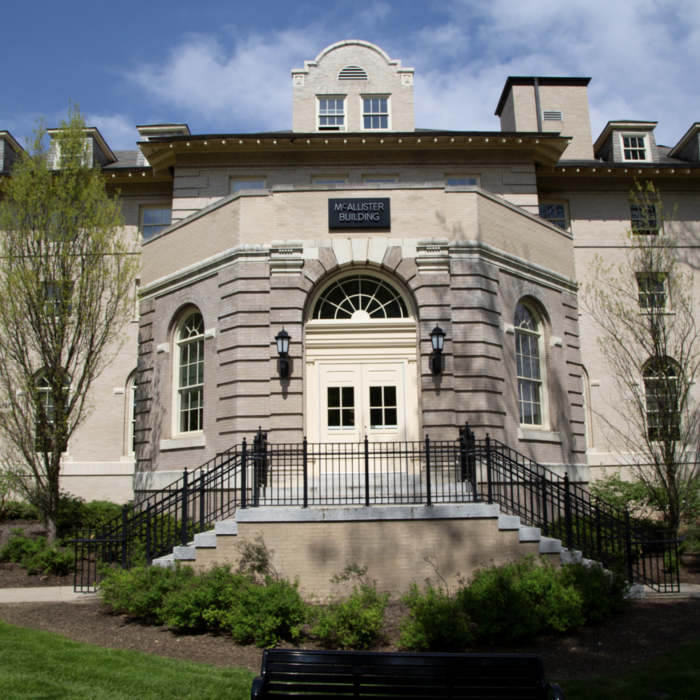
| Room Number: | MB113 |
| Date: | 04 / 29 / 2010 |
| Time: | 01:00pm - 02:00pm |