For more information about this meeting, contact Kris Jenssen, Yuxi Zheng.
| Title: | Arbitrarily slow convergence of sequences of linear operators |
| Seminar: | Computational and Applied Mathematics Colloquium |
| Speaker: | Frank Deutsch, Department of Mathematics, Penn State |
| Abstract: |
| Our objective is to study the rate of convergence of a sequence of linear operators that converges pointwise to a linear operator.
Our main interest is in
characterizing the slowest type of pointwise convergence possible. A sequence
of linear operators (Ln) is said to converge to a linear operator L arbitrarily slowly (resp., almost arbitrarily slowly) provided that (Ln) converges to
L pointwise, and for each sequence of real numbers (φ(n)) converging to 0,
there exists a point x = xφ such that
||Ln (x) − L(x|| ≥ φ(n) for all n (resp.,
for infinitely many n). The main results in this paper are two “lethargy” theorems. The first one characterizes almost arbitrarily slow convergence. The
second one gives a useful sufficient condition that guarantees arbitrarily slow
convergence. In the particular case when the sequence of linear operators is
generated by the powers of a single linear operator, it turns out that almost
arbitrarily slow convergence and arbitrarily slow convergence are equivalent.
In this case we obtain a “dichotomy” theorem that states the perhaps
surprising result that either there is linear (fast) convergence or arbitrarily slow
convergence; no other type of convergence is possible. The first lethargy
theorem is applied to show that a large class of polynomial operators (e.g.,
Bernstein, Hermite-Fejer, Landau, Fejer, and Jackson operators) all converge
almost arbitrarily slowly to the identity operator. It is also shown that all the
classical quadrature rules (e.g., the composite Trapezoidal Rule, composite
Simpson’s Rule, and Gaussian quadrature) converge almost arbitrarily slowly
to the integration functional. Finally, the dichotomy theorem is applied in
Hilbert space to generalize and sharpen: (1) the von Neumann-Halperin
cyclic pro jections theorem, (2) the rate of convergence for randomly ordered
pro jections, and (3) a theorem of Xu and Zikatanov. |
Room Reservation Information
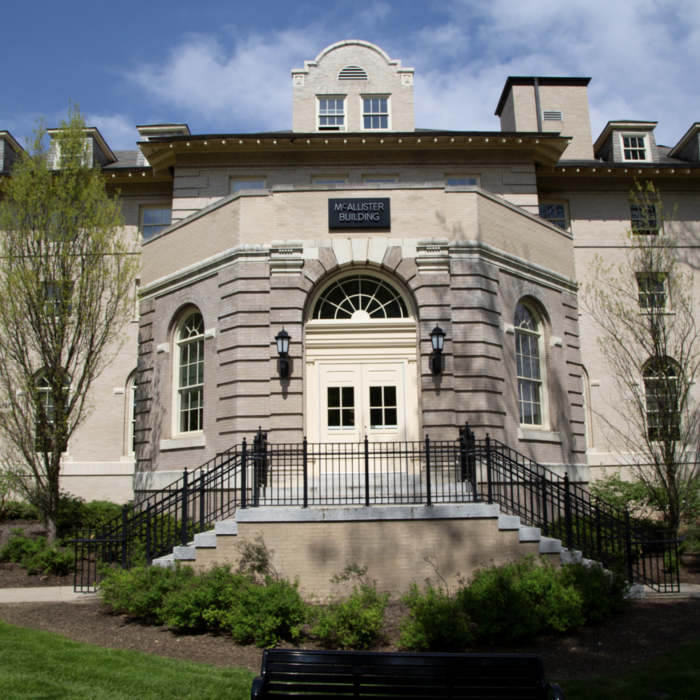
| Room Number: | MB106 |
| Date: | 10 / 16 / 2009 |
| Time: | 03:35pm - 04:25pm |