For more information about this meeting, contact Victor Nistor.
| Title: | A multi-mechanism constitutive model for cerebral arterial wall: application to cerebral aneurysm |
| Seminar: | CCMA Luncheon Seminar |
| Speaker: | Mariarita de Luca, SISSA -International School for Advanced Studies |
| Abstract: |
| A cerebral aneurysm is a localized bulge of the arterial wall, resulting from
an initial dilatation. Usually it appears on the side or at a bifurcation of
a cerebral artery. Unfortunately it is asymptomatic until rupture, and this
sudden phenomenon causes a severe cerebral hemorrhage. Advanced imaging
techniques are nowadays able to provide very helpful tools to support medical
doctors in the treatment of cerebral aneurysms.
With that future perspective, this preliminary work aims to develop a
numerical tool for a non-linear multi-mechanism model, that is suitable to
represent the mechanical behavior of the healthy cerebral arterial wall and
early stage cerebral aneurysm formation.
The core of the multi-mechanism model is to consider the arterial wall made
up two mechanisms, related to its two main passive constituents: elastin and
collagen. Histological studies show that the early stage aneurysm formation
is associated with the disruption of elastin, that is found fragmented in the
arterial wall. From experimental observations, the elastin actively
contributes to load bearing even at low deformation level, while the collagen
network is in a crimped state in its stress free con?guration. For larger
deformations, the collagen network stretches out and starts to contribute to
the mechanical behavior of the arterial wall. The strain energy of the model
is additively composed by two terms, one related to the ?rst mechanism and
the other related to the second one. The collagen recruitment and the elastin
rupture happen when some threshold deformations are reached.
The numerical model has been validated on test cases for which an analytical
solution is available, showing the expected behavior. In the case of a
cylindrical geometry representing a segment of a cerebral artery, we show
that the computational multi-mechanism model is able to capture the
non-linear and inelastic behavior of the arterial wall, and the early stage
aneurysm formation. |
Room Reservation Information
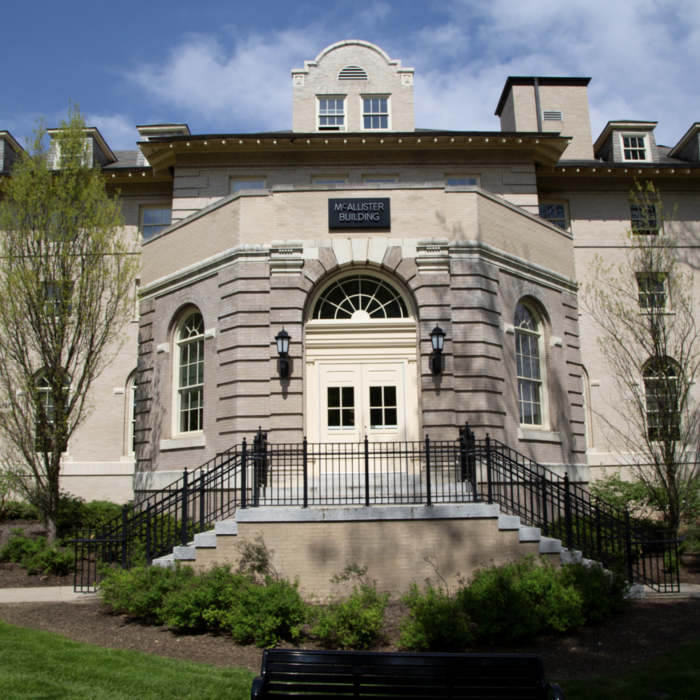
| Room Number: | MB114 |
| Date: | 12 / 09 / 2011 |
| Time: | 12:15pm - 01:30pm |